
-
-20%
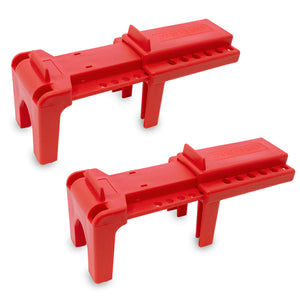
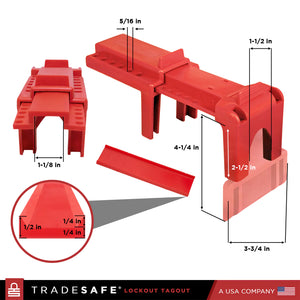 Precio habitual $39.95Precio habitual
$50.00-20%Precio de oferta $39.95 -
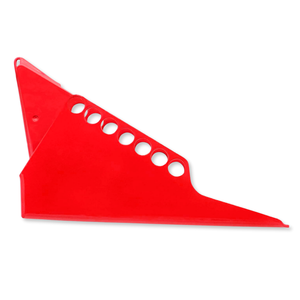
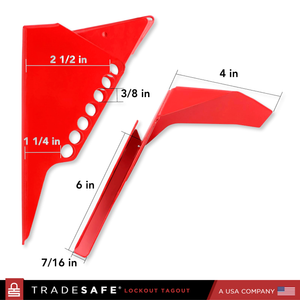 Precio habitual $23.95Precio habitual
$23.00Precio de oferta $23.95 -
-52%
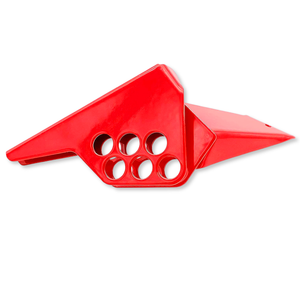
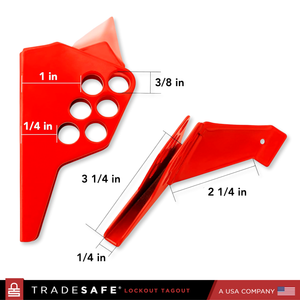 Precio habitual $26.95Precio habitual
$56.00-52%Precio de oferta $26.95 -
-48%
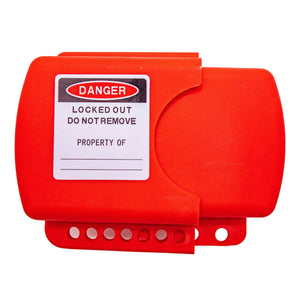
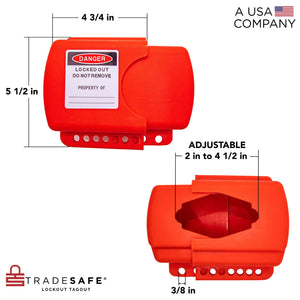 Precio habitual $35.95Precio habitual
$69.00-48%Precio de oferta $35.95
Lockout Ball Valve Systems for Secure Industrial Isolation
Ball valve lockouts deliver a direct physical barrier against accidental or unauthorized operation of compatible quarter-turn valves during equipment servicing, maintenance, inspection, and repair. Once secured in the required position with a compatible safety padlock, the device restricts handle movement to help maintain hazardous energy isolation across liquid, gas, pneumatic, utility, and process systems.
From manufacturing and processing plants to utility operations and commercial facilities, dependable valve isolation is critical wherever an unexpected flow or pressure release could disrupt maintenance work. TRADESAFE ball valve lockouts provide practical options for standard, adjustable, and flanged valve configurations, giving industrial teams stronger control over device selection without presenting any single product as a complete lockout/tagout program.
Ball Valve Lockout Tagout Devices for Maintenance Safety
Ball valve lockout tagout devices secure or enclose the operating area of a compatible valve handle so it cannot be freely rotated after a padlock is applied. This decisive mechanical restriction helps authorized employees maintain the selected valve position throughout servicing, repairs, inspections, shutdowns, and other activities requiring hazardous energy control.
Available designs may provide the following features and applications:
- Strong restriction against accidental or unauthorized valve operation
- Standard models designed for specific valve and pipe dimensions
- Adjustable models covering multiple compatible size ranges
- Flanged options for selected industrial ball valve configurations
- Integrated lock holes for individual or group lockout applications
- High-visibility construction for faster identification at the isolation point
- Durable material options suited to demanding industrial environments
- Tool-free designs that support faster application and removal
The strongest lockout choice is the one that fits the actual valve, handle, and padlock rather than the broadest product label. Buyers should compare the valve type, pipe diameter, handle length, width and thickness, device compatibility range, available lock capacity, and acceptable padlock shackle diameter. Review each product specification carefully because materials, dimensions, supported valve positions, lock capacity, and compatible configurations vary between models.
Adjustable Ball Valve Lockout Options for Different Valve Sizes
An adjustable ball valve lockout can cover several compatible pipe or handle sizes within its specified range, allowing maintenance teams to address multiple isolation points with fewer separate device sizes. This versatility can simplify LOTO inventory across facilities with varied piping systems, but the device must still match the valve configuration, dimensions, handle design, and intended locked position.
Depending on the model, adjustable options may offer:
- Adjustable coverage across multiple compatible valve sizes
- Flexible deployment at different maintenance and utility locations
- Secure restriction of compatible quarter-turn valve handles
- Compatibility with selected pipe-diameter or handle-size ranges
- Integrated lock points for authorized employees
- High-visibility construction for clear point-of-use identification
- Durable materials for repeated industrial use
- More compact inventory than multiple dedicated fixed-size devices
Standard ball valve lockouts can be the sharpest choice for frequently serviced valves with consistent dimensions, providing a dedicated device for a known isolation point. Adjustable models may be more practical when a facility manages several compatible valve sizes, while flanged models address selected larger or specialized flanged configurations. No adjustable device should be assumed to fit every ball valve. Confirm the stated dimensional range, supported valve position, handle clearance, padlock compatibility, and valve configuration before purchasing.
Ball Valve Handle Lockout Solutions for OSHA-Aligned Procedures
A ball valve handle lockout reinforces hazardous energy control by physically restricting movement of a compatible quarter-turn handle during servicing, inspection, maintenance, or equipment shutdown. This focused control is valuable across industrial water systems, gas lines, pneumatic equipment, processing systems, utility infrastructure, and facility piping where unintended valve operation could release pressure, restore flow, or expose workers to hazardous substances.
Ball valve lockout devices are one component of a complete workplace lockout/tagout program. They are designed to support OSHA lockout/tagout procedures under OSHA 29 CFR 1910.147, but the device alone does not establish compliance. Employers remain responsible for written energy control procedures, employee training, proper device selection, verification of energy isolation, periodic inspections, and facility-specific safety policies.
Browse the collection to compare standard, adjustable, and flanged ball valve lockouts by supported valve size, handle compatibility, construction material, lock capacity, and product dimensions. Select the toughest suitable option for the intended isolation point and equip your team for more consistent, organized hazardous energy control.