Colección: equipos

Saltar a la grilla de productos

15 productos

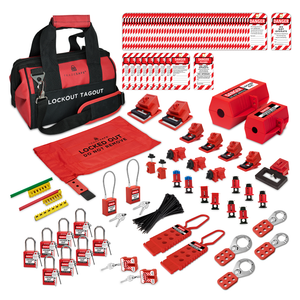
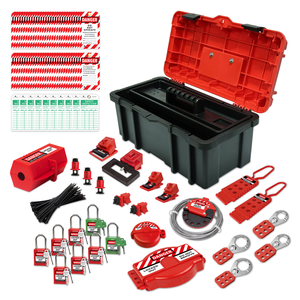
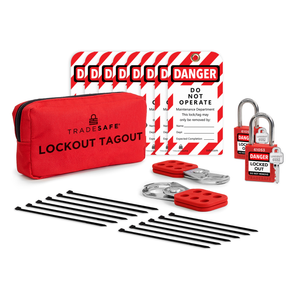
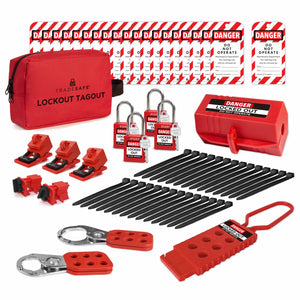
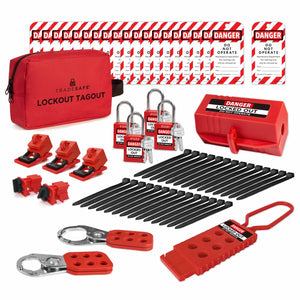
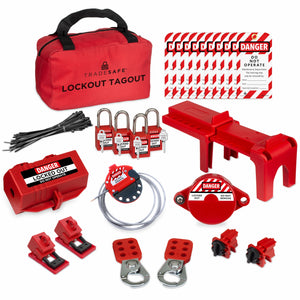
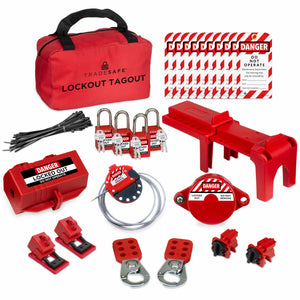
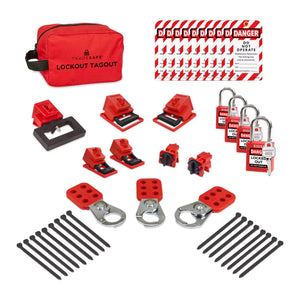
Mantenga la energía peligrosa bajo control con la ayuda de los kits de bloqueo y etiquetado de TRADESAFE. Estos kits vienen con una variedad de dispositivos de bloqueo y etiquetado que funcionan en conjunto para garantizar que el lugar de trabajo permanezca seguro y libre de lesiones.

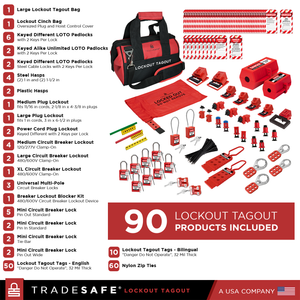
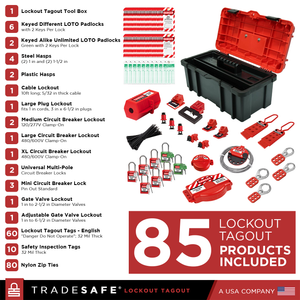
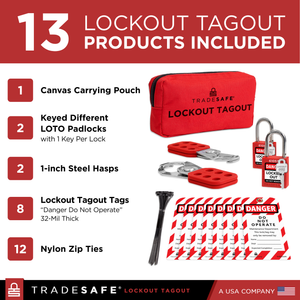
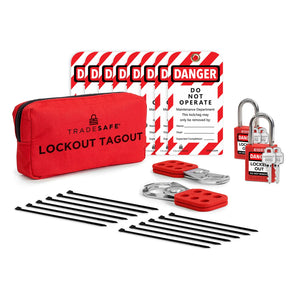
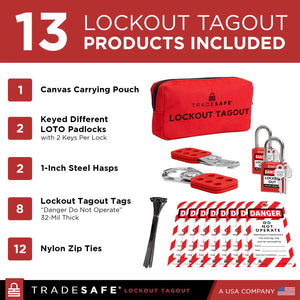
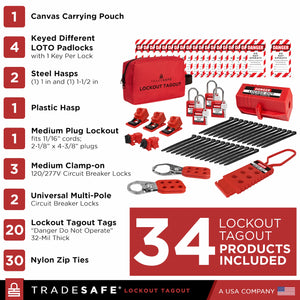
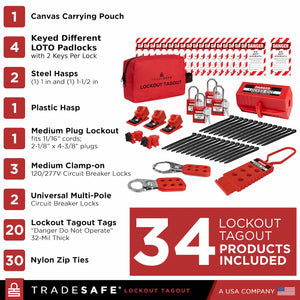
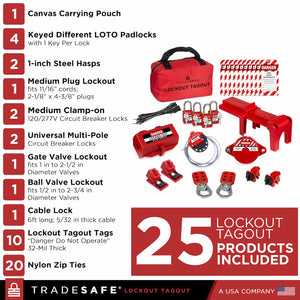
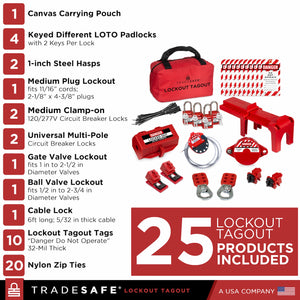
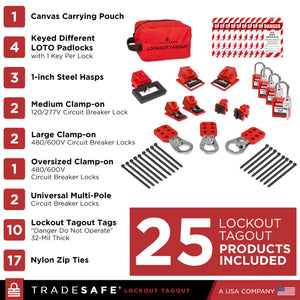
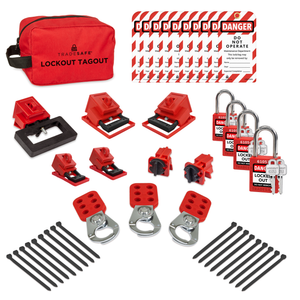
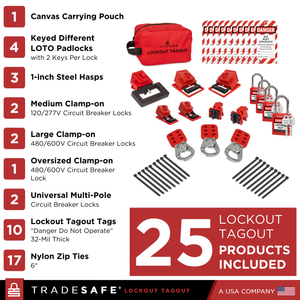
Elija entre diferentes kits que incluyen diferentes combinaciones de dispositivos LOTO. Podrá tener en sus manos colecciones de candados, cerraduras de disyuntores, cerraduras de enchufe, etiquetas de inspección, cerrojos y otros dispositivos útiles. Cada elemento del kit está garantizado para ser completamente confiable y compatible con OSHA.

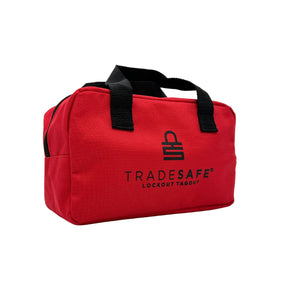
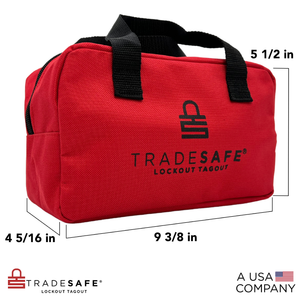
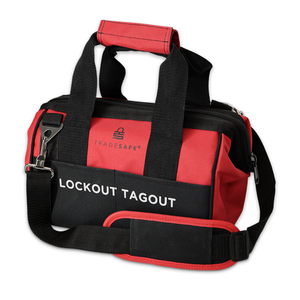
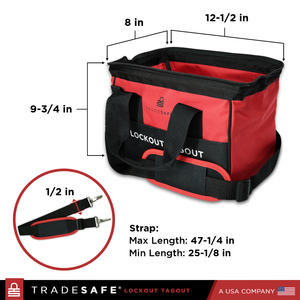
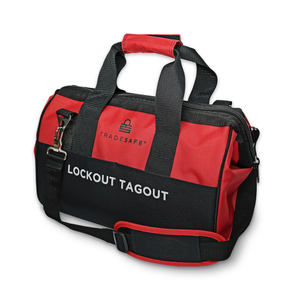
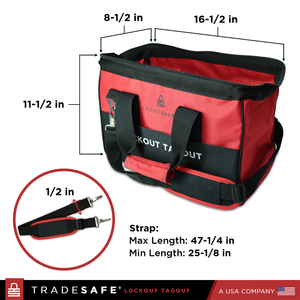
Cada kit también viene con una bolsa de lona roja muy visible con una cremallera segura. Esto puede ayudar a mantener los dispositivos a salvo de pérdidas o daños y puede ayudar a mantener el lugar de trabajo limpio y despejado.

Frequently Asked Questions

Contenido desplegable

What are lockout tagout kits used for in industrial safety programs?

These kits are used to control hazardous energy during equipment servicing and maintenance. Workers apply locking devices and warning tags to energy-isolating mechanisms such as circuit breakers, valves, or disconnect switches to ensure machinery cannot be restarted while work is being performed. This process helps protect technicians from unexpected startup or energy release and supports standardized energy control procedures within industrial workplace safety programs.

What equipment is typically included in LOTO kits?

These kits typically contain safety padlocks, lockout hasps, warning tags, and specialized devices used to secure energy-isolating mechanisms. Many sets also include breaker lockouts, valve lockouts, plug lockouts, cable lockouts, and accessories used to identify authorized personnel performing maintenance. Carrying bags or toolboxes are often included to keep the devices organized and easily accessible for technicians working across multiple areas of a facility.

How to choose the right lockout tagout set for a facility?

Selecting the right set requires evaluating the types of equipment and energy sources present in the workplace. Facilities should consider whether technicians need to isolate electrical panels, valves, plug connections, or other machinery during servicing. Many organizations choose comprehensive kits that include multiple device types and portable storage so workers have the proper tools available to safely isolate equipment across maintenance tasks and departments.

When should lockout safety kits be used during maintenance procedures?

They should be used whenever machinery or equipment must be shut down and isolated before servicing, cleaning, inspection, or repair begins. After equipment is powered off, workers place locking devices and warning tags on the energy-isolating mechanisms to prevent operation while maintenance is underway. The devices remain in place until the authorized employee confirms the work is complete and the equipment can be safely returned to service.

Why is a lockout and tagout kit important for OSHA compliance?

These kits help facilities implement the energy control procedures required by OSHA’s lockout/tagout standard (29 CFR 1910.147). The regulation requires employers to prevent equipment from being unexpectedly energized while employees perform servicing or maintenance. Providing workers with organized safety devices makes it easier to apply consistent lockout procedures, verify compliance during inspections, and maintain safer working conditions throughout industrial operations.

People Also Ask

Contenido desplegable

What are tagout devices?

Tagout devices, such as a LOTO tag, are visible warning signs that are securely tied to an energy-isolating device to indicate that it is being isolated and may not be operated until the lockout device is officially removed.

They also serve as a way of identifying who locked out the machinery, the date and time of the lockout, and the department for which the individual works. Additional information, such as a beeper number, extension number, and other relevant identifiers, can be put on the tag.

What is the essential lockout kit for an electrician?

Electricians are constantly exposed to harmful energy since they operate in close proximity to electrical energy sources. Therefore, it’s only necessary for them to always carry their own lockout kit anytime and anywhere.

So, if you’re an electrician, here are some lockout essentials that you shouldn’t miss out on having:

  • Circuit breaker lockout
  • Plug lockout
  • LOTO padlocks
  • LOTO steel and nylon hasps
  • Danger Do Not Operate lockout tags
  • Zip tie
  • Cinch bag

What are the different types of safety tags?

Safety tags are used as warning signs for temporary hazards on different procedures and equipment, including forklifts, gas cylinders, equipment inspection, lockout tagout, electrical safety, and more.

The hazards that may exist in the workplace are classified according to their severity; consequently, it is important to determine which type of tag is suitable for usage. Here are some of the most common types of safety tags:

  • LOCKOUT TAGOUT SAFETY TAG – part of OSHA safety measures to regulate energy during equipment servicing or maintenance, when an unexpected starting might result in injuries.
  • INSPECTION SAFETY TAG – keeps track of regular inspection dates and indicates the condition of ladders, scaffolds, fire extinguishers, and machinery.
  • BARRICADE SAFETY TAG – provides the conditions for accessing a regulated area as well as communicating critical information regarding risks, installation, and removal timeframes.
  • MACHINE SAFETY TAG – indicates potentially dangerous equipment, documents machine inspections, or identifies machinery that is out of service or should not be used.
  • LADDER SCAFFOLD SAFETY TAG – includes details regarding limitations, restrictions, and any other safety information relating to the particular scaffold.
  • CONFINED SPACE TAGS –  specifies certain locations that are restricted, dangerous, and require permits to enter. It also aids in the communication of entrance permissions, personnel in confined spaces, inspections, and occupants.

What is the use of zip ties in lockout tagout?

When an employer decides to use tagout instead of lockout, a zip tie can be used as a means of attachment provided it fits the standards in 1910.269(d)(3)(ii)(D). Because a zip ties is not naturally brittle, it can also be utilized as an added layer of protection.

What is a transition lock?

A red lock is used to indicate that the equipment is currently being serviced or maintained. But what if the worker is not actively working on the equipment that’s under a LOTO operation? This is when transition locks come into play. Transition locks come in gold color and are used for de-energizing equipment between work shifts.

When a piece of equipment or machinery must maintain its lockout status but a worker is not actively working on them, it is necessary to use transition locks and tags. One example of this is when equipment is still under lockout between work shifts.

So, while red locks are used to communicate that the equipment is actively being worked on, gold locks are used for these specific times of transition or extension of lockout tagout procedure in the 2nd or 3rd shift.

This means that even if the shift is over but servicing or maintenance is still not completed, the authorized employee should remove their personal red lock and tag and replace it with the transition lock and tag on the source. On the next work shift, the authorized employee must remove the transition lock and verify zero energy again, then apply their personal red lock.

This provides for LOTO continuity between employees while also requiring the worker to be sharp in LOTO procedures and verify zero energy at each source during each shift. The gold locks used in the transfer lock system are called “transition locks,” which may come in multiple keyed sets.