
-
-40%
 Precio habitual $29.95Precio habitual
$50.00-40%Precio de oferta $29.95
Butterfly Valve Lockout Devices for Industrial Valve Isolation
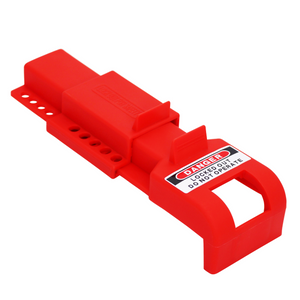
Butterfly valve lockout devices provide a purpose-built means of restricting compatible lever-operated valves during servicing, repair, inspection, and maintenance. By covering the valve head and blocking access to the handle’s release trigger, the device prevents the lever from being actuated while a safety padlock is attached. This firm physical restraint helps authorized employees maintain the selected valve position and reduce the risk of accidental or unauthorized flow changes.
In manufacturing plants, processing facilities, water systems, utility operations, and industrial piping networks, an unsecured valve can undermine an otherwise carefully planned energy isolation procedure. TRADESAFE butterfly valve lockout devices give maintenance and EHS teams a dedicated solution for compatible stainless steel, PVC, and tri-clamp butterfly valves, delivering stronger valve control than improvised restraints or lockouts designed for different valve types.
Butterfly Valve Lockout Device Features and Compatibility
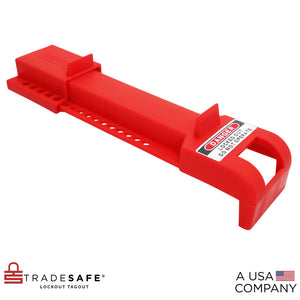
A butterfly valve lockout must match the valve’s specific operating mechanism to provide dependable restraint. On compatible lever-operated valves, the device body fits over the valve head while an adjustable outer sleeve covers the release trigger. Once properly positioned and secured with a padlock, this two-piece configuration blocks the trigger and restricts the handle from being moved out of the selected position. High-visibility red construction and integrated warning markings also make the isolated valve easier to identify during maintenance.
Key product and compatibility features include:
- Purpose-built coverage for compatible lever-operated butterfly valves
- Two-piece construction that encloses the valve head and release trigger
- Secure positioning around appropriately sized valve handles
- Adjustable outer sleeve for firm trigger restriction
- Rugged polypropylene construction for repeated industrial use
- High-visibility red color and integrated lockout warning
- Tool-free application for faster placement at the isolation point
- Three lock holes for individual or multi-worker lockout applications
- Compatibility with safety padlocks using shackles up to 5/16 inch in diameter
Fit must be confirmed before purchase. Buyers should compare the valve type, valve-head diameter, handle length, width and thickness, release-trigger configuration, device dimensions, and padlock shackle requirements against the individual product specifications. The available device is designed for a 3-11/32-inch valve-head diameter and handles measuring up to 14-3/4 inches long, 1-1/2 inches wide, and 1 inch thick. These dimensions should be treated as compatibility limits, not as confirmation that every similarly sized butterfly valve will fit.
Butterfly Valve Lockout Tagout for Safer Maintenance
Butterfly valve lockout tagout equipment helps authorized employees retain firm control of selected isolation points throughout servicing, inspection, repair, and shutdown activities. Restricting the lever handle can prevent an unplanned change in fluid or gas flow that could reintroduce pressure, movement, or another hazardous condition into the work area. The result is a clearer, more controlled maintenance environment in which the valve cannot be casually repositioned while work remains underway.
Butterfly valve lockouts can strengthen hazardous energy control through:
- Prevention of accidental or unauthorized valve operation
- Physical restriction of compatible lever-handle movement
- Coverage of the handle’s release trigger and operating mechanism
- Visible identification of an isolated butterfly valve
- Application in industrial water, utility, and processing systems
- Use with personal lockout tagout safety padlocks
- Support for individual lockout using one authorized employee’s padlock
- Support for multi-worker applications using up to three padlocks
The correct device depends on the butterfly valve design and the demands of the workplace. A lockout built for a lever-operated butterfly valve should not be treated as interchangeable with a gate valve cover, ball valve lockout, or cable-based device. Before selecting a product, confirm the complete handle profile, trigger position, valve-head dimensions, material compatibility, required padlock capacity, and facility-specific energy control procedure.
Butterfly Valve Lockouts for OSHA-Aligned Safety Programs
Butterfly valve lockouts provide a powerful point-of-use control wherever compatible valves regulate water, gas, process media, or other energy sources. By physically restricting the operating handle during maintenance, these devices help facilities establish consistent valve isolation across manufacturing plants, processing operations, water systems, maintenance departments, and industrial piping applications. Their dedicated design removes the uncertainty of relying on poorly fitted or improvised restraints.
These devices are designed to support OSHA lockout/tagout procedures under 29 CFR 1910.147, but they represent only one part of a complete hazardous energy control program. Employers remain responsible for developing written energy control procedures, training authorized and affected employees, selecting suitable lockout hardware, verifying effective isolation, conducting required inspections, and enforcing facility-specific safety policies. Each valve and lockout device must also be evaluated for proper fit before use.
Browse the collection to compare valve compatibility, handle dimensions, polypropylene construction, padlock capacity, and complete product specifications. Select a rugged butterfly valve lockout that fits the intended isolation point and gives your team decisive control over one of the piping system’s most critical operating components.