-
-50%
 Precio habitual $29.95Precio habitual
$60.00-50%Precio de oferta $29.95 -
-50%
 Precio habitual $29.95Precio habitual
$60.00-50%Precio de oferta $29.95 -
-50%
 Precio habitual $29.95Precio habitual
$60.00-50%Precio de oferta $29.95 -

 Precio habitual $79.00Precio habitual
 -

 Precio habitual $39.95Precio habitual
 -

 Precio habitual $98.95Precio habitual
 -

 Precio habitual $49.95Precio habitual
 -

 Precio habitual $98.95Precio habitual
 -

 Precio habitual $49.95Precio habitual
 -

 Precio habitual $98.95Precio habitual
 -

 Precio habitual $49.95Precio habitual
 -

 Precio habitual $49.95Precio habitual
 -
-40%
 Precio habitual $35.95Precio habitual
$60.00-40%Precio de oferta $35.95


Inspection Tags for Industrial Equipment Safety and Maintenance Programs
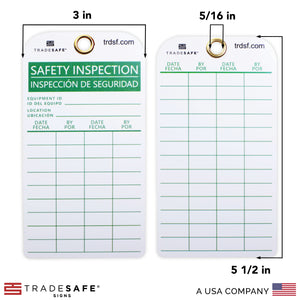
Inspection tags are essential tools for industrial equipment safety, maintenance tracking, and workplace inspection programs. In facilities where machinery, tools, safety equipment, and operating systems require regular checks, inspection tags provide a clear way to communicate equipment status directly at the point of use. They help safety managers, maintenance teams, and facility operators identify whether equipment has been inspected, serviced, scheduled for review, or flagged for additional attention. This improves workplace communication and helps reduce uncertainty during daily operations, safety checks, and compliance-focused inspections.
For industrial buyers and EHS professionals, inspection tags are more than simple labels. They support organized safety management by helping teams maintain visible inspection records, track maintenance activity, and reinforce accountability across departments. When used as part of a facility’s internal safety and maintenance program, TRADESAFE inspection tags help keep inspection information accessible where workers need it most, supporting faster recognition, cleaner documentation, and stronger equipment safety oversight.
Safety Inspection Tags Used for Workplace Compliance and Equipment Checks
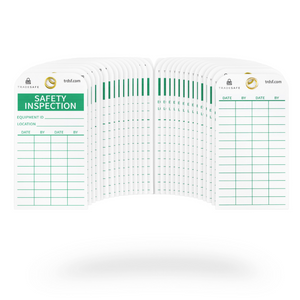
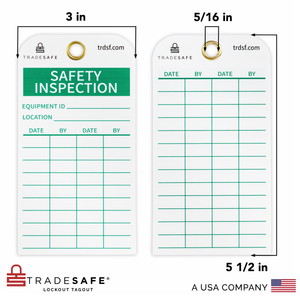
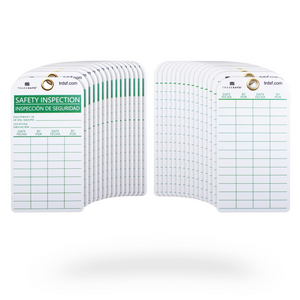
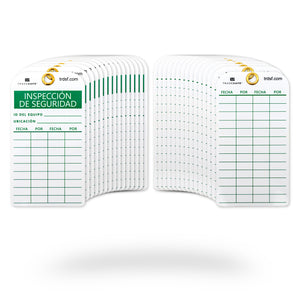
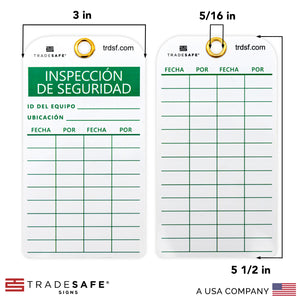
Safety inspection tags support workplace compliance programs by making equipment inspection status easier to identify, record, and verify. In industrial environments, maintenance personnel and safety teams often need a practical way to track inspections across multiple machines, tools, work areas, and safety devices. Safety inspection tags help organize that process by keeping inspection details visible on or near the equipment being checked. This supports routine monitoring, maintenance coordination, and documentation practices aligned with applicable OSHA workplace safety requirements and internal facility procedures.
Common inspection tag options include:
- OSHA-compliant inspection tags
- Writable inspection tags
- Maintenance inspection labels
- Equipment safety tags
- Industrial inspection record tags
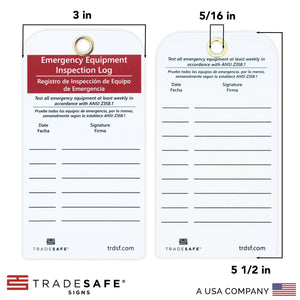
These tags are especially useful for facilities that manage recurring inspections, preventive maintenance schedules, and equipment safety checks across demanding work environments. Writable inspection surfaces allow workers to record key details such as dates, initials, status notes, or maintenance information without relying only on separate logs. By keeping inspection information close to the equipment, safety inspection tags help teams maintain more consistent records and reduce confusion during maintenance reviews, equipment checks, and workplace safety audits.
Equipment Inspection Tags for Maintenance and Industrial Safety Procedures
Equipment inspection tags must be durable, visible, and easy to read in active industrial settings. Maintenance departments depend on tags that can remain attached and legible through regular handling, equipment movement, outdoor exposure, and demanding work conditions. For inspection tracking to be effective, the tag must clearly communicate status information and provide enough space for accurate notation. Strong inspection tags help facilities maintain cleaner equipment records while supporting safety communication between operators, maintenance personnel, supervisors, and EHS teams.
Important inspection tag characteristics include:
- Tear-resistant inspection materials
- Weather-resistant industrial tags
- High-visibility inspection labels
- Reinforced tag eyelets
- Writable maintenance tracking fields
These features help equipment inspection tags perform reliably in facilities where durability and readability matter. Tags used around machinery, workstations, storage areas, utilities, and safety equipment may be exposed to moisture, abrasion, vibration, and frequent handling. When inspection information remains visible and legible, teams can quickly identify equipment status and respond according to their internal maintenance programs, inspection schedules, and workplace safety procedures.
Inspection Record Tags for Workplace Documentation and Safety Tracking
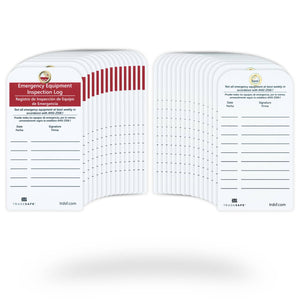
Inspection record tags help industrial facilities maintain visible documentation for equipment checks, maintenance activity, and safety tracking. They provide a practical way to record inspection information directly where equipment is located, making status details easier for workers, supervisors, and maintenance teams to review. This visibility is valuable in busy industrial environments where delayed or unclear communication can disrupt maintenance planning, equipment use, and safety coordination.
For workplace safety programs, inspection record tags support organized documentation without replacing required facility procedures, maintenance systems, or compliance obligations. They help reinforce inspection consistency by giving teams a clear place to record and review status information. When used with internal safety policies and applicable OSHA workplace safety requirements, inspection tags can support stronger equipment monitoring, better maintenance scheduling, and more reliable compliance documentation.
Browse the collection to choose reliable inspection tags designed for industrial facilities, safety inspections, maintenance departments, and workplace compliance programs. Select inspection record tags built to support visible tracking, organized documentation, and dependable equipment safety communication across demanding work environments.