
-
-42%
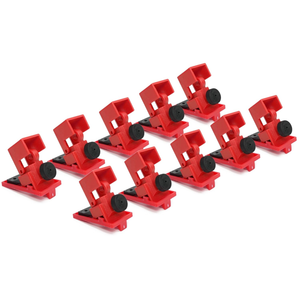
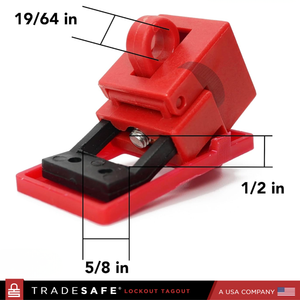 Regular price $69.95Regular price
$120.00-42%Sale price $69.95 -
-53%
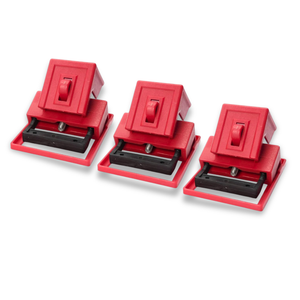
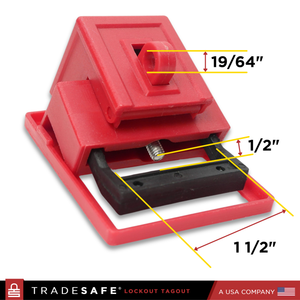 Regular price $27.95Regular price
$60.00-53%Sale price $27.95 -
-50%
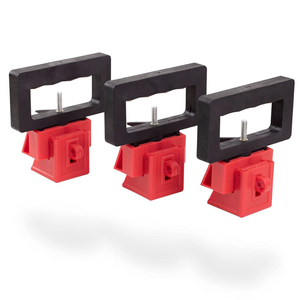
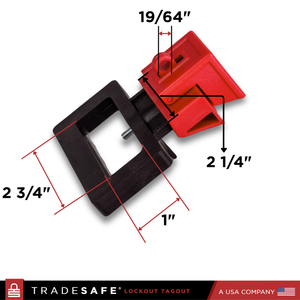 Regular price $34.95Regular price
$70.00-50%Sale price $34.95 -
-39%
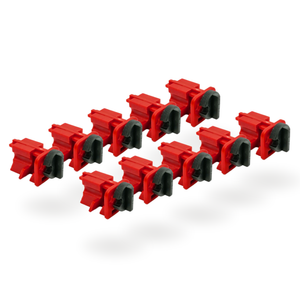
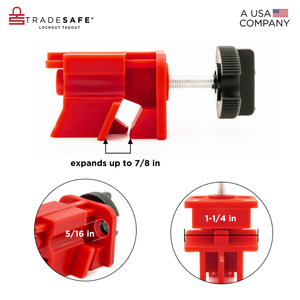 Regular price $78.95Regular price
$130.00-39%Sale price $78.95 -
-29%
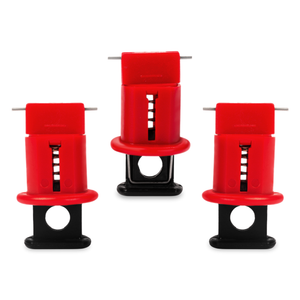
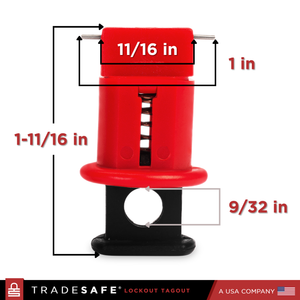 Regular price $16.95Regular price
$24.00-29%Sale price $16.95 -
-29%
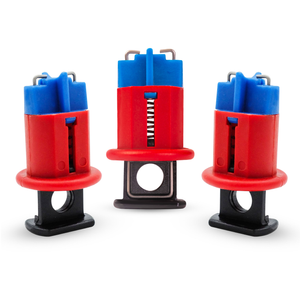
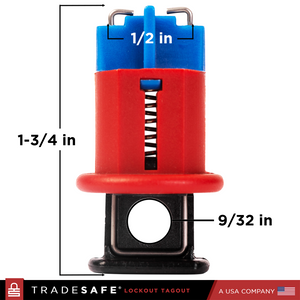 Regular price $16.95Regular price
$24.00-29%Sale price $16.95 -
-29%
 Regular price $16.95Regular price
$24.00-29%Sale price $16.95 -
-29%
 Regular price $16.95Regular price
$24.00-29%Sale price $16.95 -
-40%
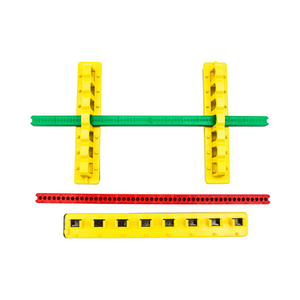
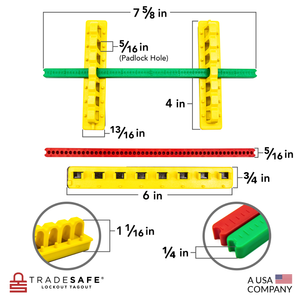 Regular price $29.95Regular price
$50.00-40%Sale price $29.95
Circuit Breaker Lockout Devices for OSHA-Compliant Electrical Safety
Circuit breaker lockout devices are used to isolate electrical energy at the source by securing breakers in the off position during maintenance, servicing, and repair work. By physically preventing the breaker handle from being switched back on, these devices reduce the risk of accidental energization, which is a primary cause of electrical injuries. They are a core component of lockout/tagout procedures aligned with OSHA 29 CFR 1910.147, which requires the control of hazardous energy during servicing activities.
For industrial buyers and safety professionals, breaker lockouts provide a direct, equipment-level control point. Instead of relying on administrative warnings alone, these devices create a physical barrier at the circuit level. TRADESAFE circuit breaker lockout devices are designed to support consistent lockout practices, helping teams standardize procedures, improve worker protection, and maintain compliance across electrical systems of varying complexity.
Lockout Devices for Circuit Breakers Used in Industrial Applications
Lockout devices for circuit breakers are used across manufacturing plants, commercial facilities, and maintenance operations where electrical systems must be safely de-energized before work begins. These devices are applied directly to breaker panels, ensuring that circuits remain isolated while technicians perform inspections, repairs, or installations.
Common applications of circuit breaker locks include:
-
isolating electrical circuits during maintenance
-
preventing accidental breaker reactivation
-
improving visibility of locked circuits
-
supporting lockout/tagout procedures
-
reducing risk of electrical hazards
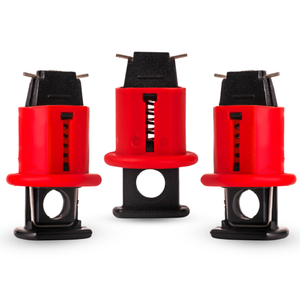
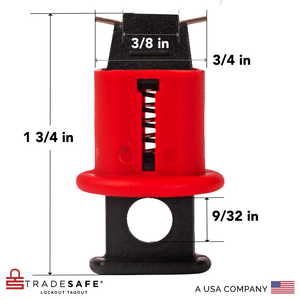
Because breaker configurations vary widely, facilities often require multiple device types, such as a single pole circuit breaker lockout for standard panels, miniature circuit breaker lockouts for compact systems, and a universal circuit breaker lockout device for broader compatibility. This range allows maintenance teams to address real-world variations in breaker design while maintaining consistent safety practices.
Clamp-On Circuit Breaker Lockout for Fast and Secure Isolation
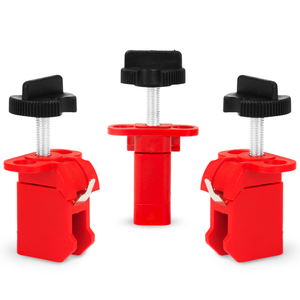
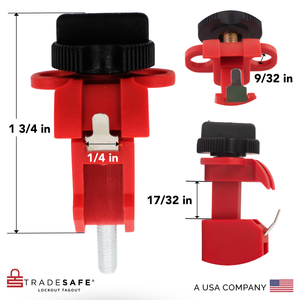
Clamp-on circuit breaker lockout devices are widely used for their speed, ease of use, and secure fit. These devices attach directly to the breaker switch using thumbscrew mechanisms, eliminating the need for additional tools during installation. This makes them practical for field use where time and consistency matter.
Key features of clamp-on circuit breaker lockouts include:
-
tool-free installation
-
compatibility with various breaker types
-
secure locking mechanisms
-
durable industrial-grade materials
-
high-visibility design for safety identification
Clamp-on designs are commonly used alongside miniature circuit breaker lockout models to cover a wider range of breaker sizes and configurations. Their non-conductive construction, often using reinforced nylon or polypropylene, adds an extra layer of protection in electrical environments while maintaining durability under repeated use.
Circuit Breaker Lockout for Targeted Electrical Control
Circuit breaker lockout devices provide precise control over electrical isolation by targeting the exact circuit being serviced. This level of control is essential in complex systems where multiple circuits are housed within a single panel. By locking out only the affected breaker, operations can continue elsewhere while maintenance is safely performed.
These devices also support clearer communication within lockout/tagout programs. A locked breaker visually signals that work is in progress, helping prevent unauthorized access or accidental reactivation. When combined with proper tagging and procedural controls, breaker lockouts contribute to a safer and more organized work environment.
Explore the collection to find clamp-on, universal circuit breaker lockout, and miniature circuit breaker lockouts designed for different applications. Choosing the right device helps ensure proper fit, reliable isolation, and consistent compliance with electrical safety procedures. For quicker selection, refer to our breaker lock solution guidelines to match the right TRADESAFE device to your breaker type and pole configuration.