LOTO Hasps

Skip to product grid
3 products

Lockout Tagout Hasps for Safe Group Lockout Procedures

Lockout tagout hasps are essential devices for safe group lockout procedures, allowing multiple workers to secure a single energy isolation point during maintenance and servicing. By enabling each authorized employee to apply their own padlock, these devices ensure that equipment cannot be re-energized until every individual has completed their task, eliminating the risk of accidental startup.

In industrial environments where coordination is critical, this shared control point becomes the foundation of an effective lockout tagout program. TRADESAFE lockout tagout hasps are designed to support OSHA 29 CFR 1910.147 compliance while improving safety coordination across teams. Whether used on electrical panels, mechanical systems, or fluid controls, they provide a reliable way to maintain hazardous energy isolation until all work is safely completed.

Lockout Hasps for Controlling Hazardous Energy During Maintenance

Lockout hasps act as a central control mechanism for hazardous energy during maintenance, ensuring that equipment remains safely de-energized while multiple workers are performing servicing tasks. By creating a single lockout point for several padlocks, they eliminate confusion and enforce strict lockout control.

Key functions of lockout hasps include:

  • allowing multiple padlocks on a single lockout point

  • preventing equipment re-energization until all locks are removed

  • improving coordination between maintenance team members

  • supporting compliance with lockout tagout procedures

  • durable construction for industrial environments

This “last lock removed” system significantly reduces the risk of human error, especially in high-risk or complex maintenance operations. As a result, lockout hasps play a critical role in hazardous energy control strategies across manufacturing, utilities, and industrial facilities.

Multi Lock Hasps for Multiple Workers on One Energy Source

Multi lock hasps are designed for situations where multiple authorized employees must work on the same equipment or energy source at the same time. Instead of relying only on procedures, these devices enforce physical lockout control by requiring each worker to apply and remove their own lock.

Typical features and applications include:

  • multi lock hasps for shared lockout responsibilities

  • compatibility with various safety padlock types

  • use in electrical, mechanical, and valve lockout systems

  • high-visibility designs for improved safety awareness

  • corrosion-resistant materials for long-term durability

By giving each worker direct control over their own lock, multi lock hasps strengthen accountability and ensure that no step in the lockout process is bypassed. This is especially important in environments where multiple teams or contractors are working simultaneously on critical systems.

Group Lockout Hasp for Coordinated Workplace Safety

A group lockout hasp creates a clear and standardized approach to multi-person lockout scenarios. It establishes a single, visible control point where all authorized employees must apply their locks, reducing confusion and improving communication during maintenance, shutdowns, or inspections involving multiple workers.

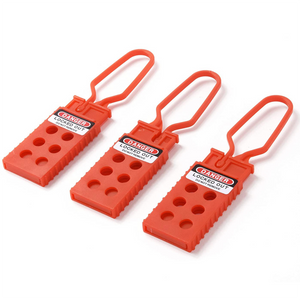
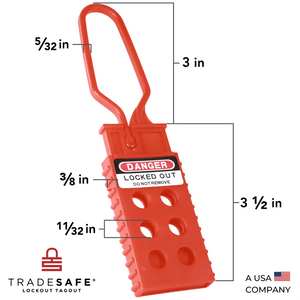
Different materials and configurations allow these devices to perform reliably across various industrial applications. Steel hasps provide strength and resistance to impact, chemicals, and corrosion, while non-conductive options like polypropylene are ideal for electrical lockout situations. High-visibility designs and clear labeling further enhance safety awareness, ensuring that lockout status is immediately recognizable across the workplace.

Browse the full selection of lockout tagout hasps to find solutions tailored to your lockout points, team size, and application requirements. Choose durable, high-performance hasps that improve coordination, support OSHA-compliant procedures, and keep every worker protected during group maintenance operations.

Frequently Asked Questions

What are lockout tagout hasps and how do they work?

Lockout tagout hasps are safety devices used in group lockout procedures to allow multiple workers to secure a single energy isolation point. Each authorized employee attaches their own padlock to the hasp, ensuring that equipment remains locked out until every lock is removed. This method provides reliable hazardous energy control and helps maintain OSHA compliance during maintenance and servicing activities.

When should lockout hasps be used during maintenance procedures?

Lockout hasps should be used whenever more than one worker is servicing the same equipment or energy source at the same time. They are especially critical during shutdowns, inspections, and complex maintenance tasks where coordination is required. Using a hasp ensures that each worker retains control over the lockout point, preventing accidental re-energization until all work has been safely completed.

How do multi lock hasps allow multiple workers to lock out one energy source?

Multi lock hasps are designed with multiple padlock holes, allowing several workers to secure one isolation point simultaneously. Each worker applies their own lock, creating a system where the equipment cannot be re-energized until every lock is removed. This approach strengthens accountability, improves coordination, and ensures that hazardous energy remains fully controlled throughout the maintenance process.

What is a group lockout hasp used for in industrial safety programs?

A group lockout hasp is used to manage shared lockout responsibilities within industrial safety and lockout tagout programs. It provides a clear and structured way for multiple workers to secure a single energy source, reducing confusion and improving safety coordination. These devices play a key role in preventing unexpected startup and supporting OSHA-compliant hazardous energy control procedures.

How is a hasp lockout tagout device used in group lockout procedures?

In group lockout procedures, a hasp is applied directly to an energy isolation device such as a disconnect switch, breaker, or valve. Each authorized worker then attaches their own padlock to the hasp, ensuring individual control over the lockout. This setup prevents the system from being re-energized until all locks are removed, making it a reliable solution for safe and coordinated maintenance operations.

People Also Ask
How does a lockout hasp work?

OSHA requires that hazardous energy sources be "isolated and rendered inoperative" before work is started on the equipment in question.

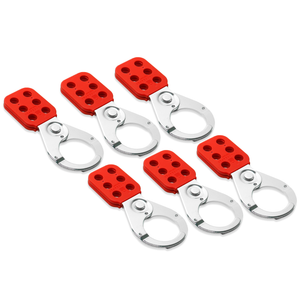
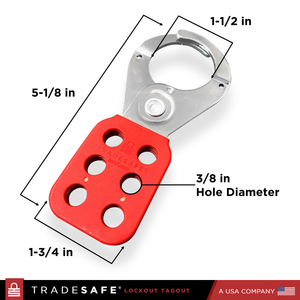
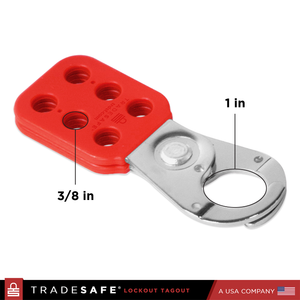
A lockout hasp typically has a 1-inch inner shackle diameter and a lock body that can accommodate up to six padlocks. Lockout hasps are placed through a latch on the machinery to be locked out and each employee performing maintenance or service work attaches their padlock through one of the six holes within the hasp, together with a LOTO tag to warn and inform other workers of the ongoing LOTO procedure.

How do you know a lockout hasp is OSHA compliant?

OSHA compliance does not only mean a “heavy duty hasp”, but it should also be standardized, substantial, identifiable, and precision-engineered exclusively for safety. Plus, a good lockout hasp would be pointless if applied incorrectly. Therefore, the foundation of being compliant to OSHA lockout tagout standards is proper LOTO training.

Are steel lockout hasps better than non-conductive plastic hasps?

Choosing a material for your lockout hasps will depend on how and for what purpose you will use them. Stainless steel, aluminum, and non-conductive plastic hasps are the most common materials available in the market that can cater to various industry needs.

Steel lockout hasps are stronger, more temperature- and chemical-resistant than aluminum, making them more suitable for heavy-duty and industrial applications.

Aluminum hasps, on the other hand, have a higher strength-to-weight ratio than stainless steel, making them excellent for personal use.

Meanwhile, non-conductive hasps entirely eliminate the chance of metal parts conducting current from an electrical hazard while still being resistant to corrosion, severe temperatures, and chemicals.

TRADESAFE offers both steel and non-conductive plastic lockout hasps.

Do TRADESAFE lockout hasps come with their own chain?

While OSHA does not require chains to be attached to lockout hasps, these chains give an added layer of security. It enables the attachment of lockout hasps on the equipment, which prevents losing or misplacing it. However, at the time, TRADESAFE lockout hasps do not have this particular feature.

What is a multi-lock hasp?

Safety lockout hasps are also known as multi-lock hasps because multiple padlocks can be applied to them, which also allows an energy source to be isolated by more than one worker.

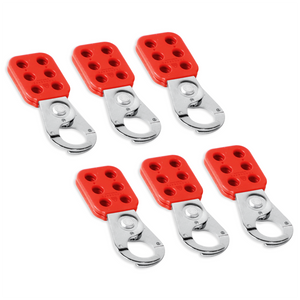
A lockout hasp often has 6 holes to accommodate multiple lockout tagout padlocks, as shown at TRADESAFE. Other designs, on the other hand, include more than 6 holes to accommodate bigger group LOTO operations.