
-
-43%
 Regular price $84.95Regular price
$150.00-43%Sale price $84.95 -
-43%
 Regular price $84.95Regular price
$150.00-43%Sale price $84.95
Power Plug Locks for Industrial Electrical Lockout Applications
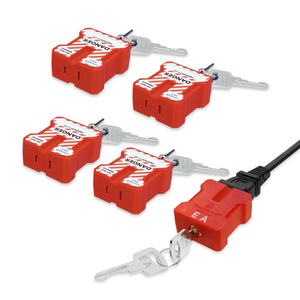
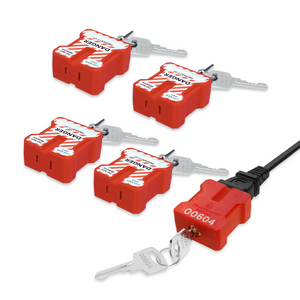
Power plug locks give industrial teams a compact way to restrict the use of compatible cord-connected equipment during servicing, maintenance, inspection, or other controlled work. TRADESAFE keyed plug locks secure the plug itself, helping facilities keep equipment disconnected while authorized employees carry out their written energy control procedures.
Each lock fits onto compatible plug prongs and uses an integrated keyed mechanism to restrict removal until the correct key is used. This design differs from larger plug lockout covers or enclosures that surround the plug body. Buyers should confirm the plug configuration and product dimensions before purchasing because fit depends on the electrical plug and the device specifications.
Power Plug Lockout for Securing Compatible Electrical Equipment
A power plug lockout should match the facility’s equipment, access plan, and key-management requirements. The products in this collection share a compact red nylon body, key-retaining brass-core cylinder, and support for compatible 2-prong and 3-prong plugs, including polarized and non-polarized configurations. They differ primarily in how access is assigned through their keying systems.
Compare these product characteristics before selecting a set:
- Compatibility with 2-prong or 3-prong power plugs
- Polarized or non-polarized plug compatibility
- Tamper-resistant nylon lock body construction
- Non-conductive construction
- Keyed different or keyed alike unlimited configurations
- Key-retaining locking mechanism
- Five locks included per set
- Two keys supplied per lock
- Matching lock and key identification codes
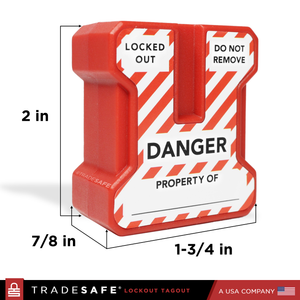
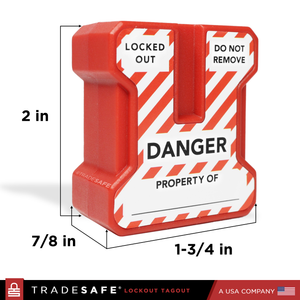
- 2 x 1-3/4 x 7/8 in. device dimensions and plug fit
- Integrated Danger labels with space for additional identification
Although both available sets share the listed construction, dimensions, pack quantity, and plug compatibility, their keying systems serve different control needs. Buyers should confirm plug fit, required key access, material, number of locks and keys, identification features, and other technical specifications against the equipment and facility program before ordering.
Power Plug Lockout Device Options for Workplace LOTO Programs
Selecting a power plug lockout device requires a clear decision about who should be able to open each lock. Keyed different sets give every lock a unique code and its own keys, supporting individually controlled access. Keyed alike unlimited sets share a common key code across the five-lock set and additional packs, which can simplify authorized shared access and expansion where that arrangement matches the facility’s written procedures.
Evaluate the following key-management and application factors:
- Keyed different versus keyed alike unlimited configurations
- Individual versus shared key access requirements
- Number of power plug locks required
- Number of supplied keys
- Lock and key identification
- Key-retaining features
- Plug type and prong configuration
- Lock body dimensions
- Non-conductive nylon construction and electrical properties
- Equipment and workplace application
- Replacement or expansion requirements for larger lock groups
Choose the keying configuration according to the facility’s lock-management approach, authorized access rules, and equipment-isolation procedures. Do not assume that every electrical power plug lock uses the same keying system or fits every plug, voltage, or device. Confirm the intended plug, prong configuration, dimensions, keying arrangement, and supplied keys for the individual product.
Electrical Power Plug Lock Selection for Industrial Facilities
An electrical power plug lock may be practical wherever compatible cord-connected machinery, tools, appliances, or other equipment must remain disconnected during controlled work. Manufacturing plants, maintenance departments, workshops, warehouses, processing facilities, and commercial operations can use these devices as one component of a broader lockout/tagout and hazardous energy control program.
These locks are designed to support electrical equipment isolation during maintenance and servicing under facility-specific procedures. They do not establish compliance by themselves. Employers remain responsible for written energy control procedures, employee training, authorized application, manufacturer instructions, plug and product compatibility, and applicable requirements such as OSHA 29 CFR 1910.147.
Browse the collection to compare keyed different and keyed alike unlimited power plug locks by plug compatibility, key access, identification, construction, pack quantity, supplied keys, and dimensions. Review each product specification to select the configuration that fits your equipment and facility requirements.