-
-40%
 Regular price $35.95Regular price
$60.00-40%Sale price $35.95 -
-40%
 Regular price $35.95Regular price
$60.00-40%Sale price $35.95 -
-40%
 Regular price $35.95Regular price
$60.00-40%Sale price $35.95
Caution Tags for Industrial Equipment Safety and Maintenance
Caution tags play an important role in industrial workplace safety by helping identify equipment that is unsafe to operate, temporarily unavailable, under repair, or undergoing inspection. In manufacturing plants, warehouses, processing facilities, and maintenance departments, these tags provide clear visual communication that equipment requires attention before returning to normal operation. Caution tags help workers recognize equipment status quickly, reducing confusion during servicing activities and helping facilities maintain more organized workplace safety procedures.
Industrial maintenance teams and EHS professionals use caution tags to support hazard communication, equipment identification, and OSHA-aligned workplace safety programs. When equipment is being repaired, inspected, cleaned, or evaluated, visible warning tags help reinforce safer communication between operators, maintenance personnel, contractors, and supervisors. TRADESAFE caution tags are designed to support industrial maintenance and safety applications where durability, readability, and consistent workplace communication are critical to day-to-day operations.
OSHA Caution Tags Used in Workplace Safety Programs
OSHA caution tags help industrial facilities communicate equipment status during maintenance, servicing, inspection, and repair operations. These tags are commonly applied to machinery, tools, systems, and equipment that should not be operated until maintenance activities are completed or safety concerns are resolved. By improving visibility around restricted or unavailable equipment, caution tags help reduce the risk of accidental use while supporting workplace safety communication across departments and work shifts.
Common caution tag options include:
- OSHA-compliant caution tags
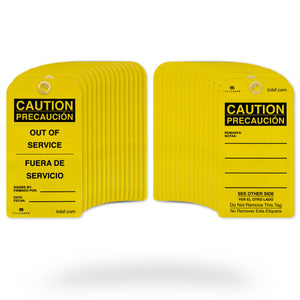
- Bilingual caution tags
- Equipment warning tags
- Writable maintenance tags
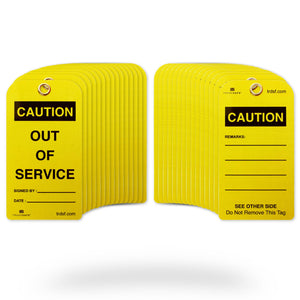
- Industrial out of service tags
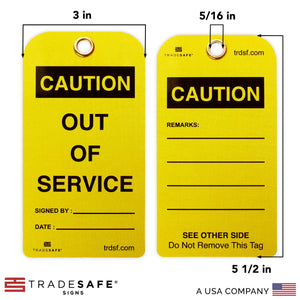
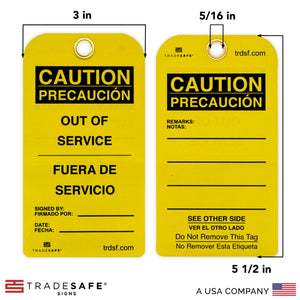
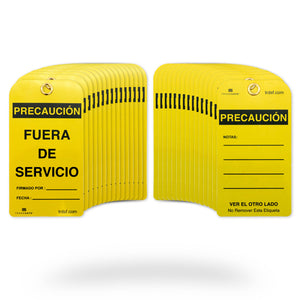
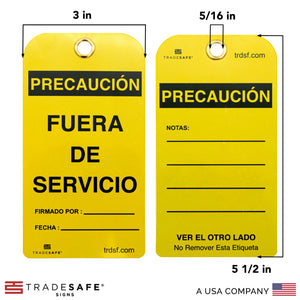
These tags are especially useful in facilities that require clear maintenance communication across large operations, multiple departments, or multilingual workforces. Writable surfaces allow workers to document inspection details, maintenance notes, service dates, or equipment status directly on the tag for faster identification during servicing activities. Facilities can also choose English-only or bilingual English and Spanish caution tags to improve communication consistency in diverse industrial work environments.
Caution Safety Tags for Equipment Servicing and Hazard Communication
Caution safety tags used in industrial workplaces must remain visible, durable, and easy to read throughout maintenance and servicing operations. In active industrial environments, tags may be exposed to moisture, chemicals, vibration, abrasion, sunlight, and repeated handling. Strong caution tags help facilities maintain clearer hazard communication by keeping equipment status visible during inspections, repairs, maintenance scheduling, and temporary shutdown procedures.
Important caution safety tag characteristics include:
- Tear-resistant tag materials
- High-visibility caution labels
- Weather-resistant industrial tags
- Reinforced tag eyelets
- Writable inspection and maintenance tags
These features help caution safety tags perform reliably in demanding maintenance and facility environments where long-term readability and durability matter. Heavy-duty PVC vinyl construction, reinforced brass grommets, and spacious writable surfaces help improve usability while reducing wear caused by vibration, handling, and mechanical movement. High-visibility warning messaging also helps workers identify restricted equipment faster, supporting stronger workplace hazard communication during servicing and inspection activities.
Caution Out of Service Tags for Industrial Facilities and Maintenance Operations
Caution out of service tags are essential for clearly identifying equipment that should not be operated during inspections, servicing, repairs, or maintenance procedures. These tags help communicate temporary equipment restrictions directly at the point of use, making it easier for workers and supervisors to recognize equipment status before operation. In industrial environments where multiple teams may interact with the same machinery or systems, visible out of service identification supports safer coordination and more organized maintenance communication.
As part of workplace safety and equipment management programs, caution out of service tags help reinforce hazard communication and support OSHA-compliant safety labeling practices. While caution tags do not replace facility-specific maintenance procedures or internal safety policies, they help improve visibility around equipment conditions that require servicing, evaluation, or temporary shutdown. Facilities should always follow their own maintenance programs, workplace safety requirements, and compliance procedures when managing equipment safety and operational status.
Browse the collection to find durable caution tags and out of service tags built for industrial facilities, maintenance departments, and workplace safety programs. Choose from English-only or bilingual English and Spanish caution tags designed to support clear hazard communication, organized maintenance tracking, and dependable industrial equipment identification.